
TikTok launches AI literacy initiative to strengthen AIGC detection and labeling
TikTok announced a series of AI literacy measures, including educational guides, an in-app hub, funding support, detection system upgrades, and expanded labeling partnerships, to address challenges posed by AI-generated content.
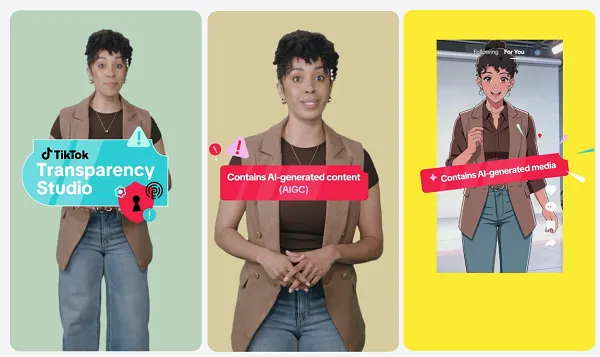
TikTok recently announced a new initiative aimed at addressing the increasing amount of AI-generated content (AIGC) within the app, including expanding user education programs and improving detection systems to enhance transparency. The core of this plan is to help users identify and understand AIGC, while also strengthening the platform's governance of AI-generated content.
AI Literacy Guide and Education Programs
First, TikTok has launched a new AI literacy guide to help users identify AI content within the app. Developed in collaboration with industry partners NAMLE and Henry Ajder, the guide includes video overviews and explanatory content, aiming to better equip users with methods for identifying AI-generated content.

As TikTok explained: "We've learned from experts that education is crucial for giving people control over their AI experience. So, we partnered with industry collaborators NAMLE and Henry Ajder to create a new guide to help our community use AI tools responsibly."
Additionally, TikTok plans to launch an in-app hub in the coming weeks. This hub will provide practical skills for identifying AI-generated content when users search for AI-related terms.
Funding Support and Detection System Upgrades
TikTok also announced expanded funding support for AI literacy programs, including NoFiltr and the Raspberry Pi Foundation. These programs aim to promote AI literacy through TikTok content.
At the same time, the company is strengthening its own AI detection efforts to identify AI-generated spam and misinformation. TikTok stated: "We have always prohibited spam and used technology to detect and remove such content at scale, removing over 86 million fake accounts in the first three months of this year alone. But as this content evolves, so must our approach to protecting platform integrity. In the coming weeks, we will test improved detection systems specifically targeting accounts that exclusively post AI-generated spam, especially those involving topics that may pose risks to public trust or well-being, including politics and current events, financial advice, and medical content."
Labeling Partnership Expansion
Finally, TikTok announced the expansion of its labeling partnerships, aiming to mark more AI content within the app. TikTok stated: "To date, we have labeled over 3 billion videos as AIGC through a combination of Content Credentials, creator labeling tools, and invisible watermarking technology."
Industry Context and Challenges
These updates reflect the increasingly difficult dilemma social media platforms face regarding generative AI. On one hand, social apps want to introduce creative AI options to align with the latest technological trends and boost user engagement; on the other hand, users are growing weary of low-quality AI-generated content, commonly known as "AI slop," which is produced at scale because these tools are accessible to billions of users.
This is not to say that AI is bad in this context. The technology has already created many engaging viral videos and images. But like all creative tools, many experiments do not resonate.
Furthermore, social media users are now being treated as test audiences for countless AI experiments that are beginning to crowd out quality content. As platforms offer financial incentives for high-performing posts and impose no limits on the volume of content posted, AI-generated low-quality content floods into every app.
This wave may now dilute the overall value of social apps, leading to a decline in user engagement. Therefore, platforms must take countermeasures to reduce the negative impact of their own AI tools. This has led to a confusing practice: AI is being promoted as both good and bad. In reality, it is neither, as everything depends on the specific use case. For now, however, negative uses seem to outweigh positive ones.