
Pinterest launches Amazon storefront link feature to simplify creator affiliate marketing
Pinterest announced the launch of the Amazon Storefront link feature, which allows eligible creators to showcase their Amazon store on their profile and automatically apply affiliate links to Pins without manual addition. This move aims to enhance cross-platform product discovery and sales conversion, while also driving more traffic to the Amazon Associates program.
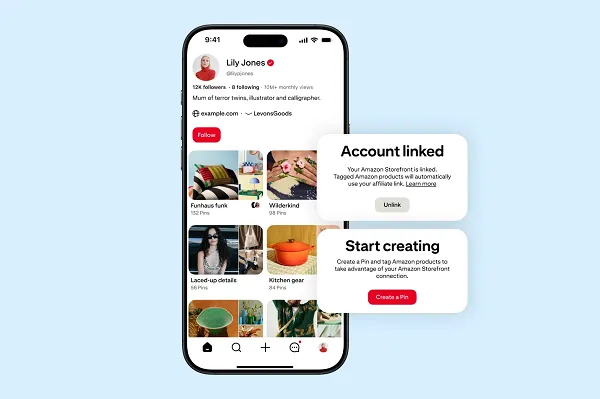
Pinterest is simplifying in-app affiliate marketing opportunities with a new Amazon Storefront link option. The feature will allow Amazon Storefront creators to easily add affiliate links to their Pins.

Amazon Storefront enables creators to build their own recommended product stores within Amazon's system, showcase these products to shoppers, and earn commissions from related sales.
Now, Storefront users will be able to easily extend their promotions to Pins, boosting discovery potential across both platforms.
As Pinterest explains: "With this feature, eligible creators will see their Amazon Storefront username displayed directly on their Pinterest profile, providing users with another way to discover recommended products and items from creators they trust."

Pinterest says this update will make it easier for creators to tag Amazon products on Pins, with Pinterest automatically applying their Amazon affiliate information, "without needing to manually add affiliate links or IDs."
This could provide a significant boost to Amazon's affiliate program, while also giving creators more reasons to post content on Pinterest and stay active within the app.
In fact, according to Pinterest data, over 50% of its 631 million monthly active users come to the platform to shop, leading to more than 80 billion in-app searches each month.
This represents a huge potential reach for Amazon's affiliate program. Meanwhile, simplified links will make it easier to facilitate in-app attributed sales.
This is another step in Pinterest's broader shopping evolution, as it strives to become the "shopping mall of the internet," facilitating broader discovery and shopping activity in-feed.