
Will social platforms charge all users?
Following Meta's announcement of a series of new add-on subscription packages, questions about the future viability of free social media have again emerged. This article reviews Musk's assertion that paid social media will eventually dominate, Zuckerberg's commitment to the free model, and, based on adoption rate data for paid subscriptions across platforms, explores the possibility of social platforms charging all users and the practical obstacles they face.
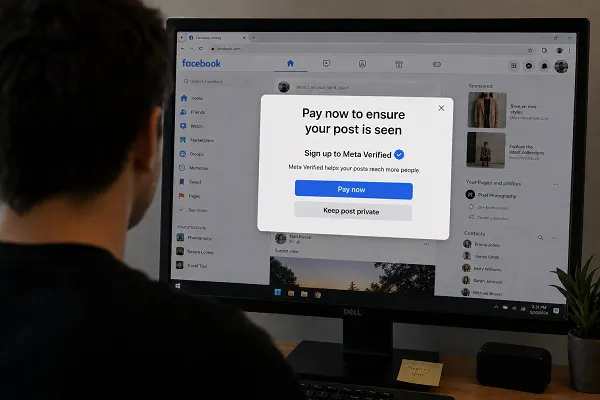
After Meta announceda series of new additional subscription packagesquestions about the future viability of free social media have once again been raised: at some point, will everyone have to pay to use these apps?
The idea that "all platforms will eventually charge a fee for access" is mentioned from time to time. Some see paid social media subscriptions as the only way to eliminate spam senders and scammers, arguing that this would stop them from creating millions of new accounts for free.
In 2023, just months after acquiring Twitter, X owner Elon Muskhinted that his app might soon be forced to charge all userseven if only a small fee, precisely for the reason mentioned above.
According to Musk, at that time the development of artificial intelligencehad made it impossible to stop bot armiesbecause "it is easy to create 100,000 human-like bots at a cost of less than one cent per account."
"Paid verification increases the cost of bots by about 10,000%, and makes it easier to identify bots through phone and credit card clustering," Musk said.
On this basis, Musk further predicted that paid social media would eventually become "the only social media that matters."
Historically, Meta CEO Mark Zuckerberg has been committed to keeping his company's apps free. In 2018, hetold the U.S. Congressthat "there will always be a free version of Facebook."
This makes sense. Meta derives about 98% of its annual revenue from advertisingand this is only possible thanks to its vast reach of over 3 billion active users.
If Meta forced everyone to pay, many people would at least consider living without Facebook and Instagram. Given the many other options available, if Zuckerberg chose that path, it would likely be a huge misstep, or at least a huge risk.
Moreover, historically, there is limited precedent for paid social as an option.
Today, platforms offer paid subscription services, but most have very limited adoption rates.
About4.5% of YouTube's user base pays for YouTube Premiumwhileless than 1% of X users pay for X PremiumMeanwhile, the relatively successful Snapchat+ has subscribers accounting for only about2.6% of the platform's total monthly audience。
Meta has not yet released official data on Meta Verified subscriptions, but fromMeta's quarterly earnings updatesit appears that around 35 million Facebook and Instagram users may have already signed up for Meta Verified. That number is not small, but it represents only about 0.98% of Meta's massive audience.
LinkedIn Premium may have the highest subscription adoption rate. Similar to Meta, LinkedIn does not release official data, but external estimates suggest thatabout 18% of the platform's members pay for its premium features。
but overall, the data shows that not many people are willing to pay for social media apps, further highlighting the risk any platform would take if it forced users to pay.
So, could X or Meta decide to make everyone pay $1 per month to use their apps? Of course, it's possible.
But would they do it? Most likely not.
What is more likely is the introduction of more subscription services for AI features, as every platform wants to build a business model to monetize expensive AI features—which cost billions or even trillions of dollars to develop and maintain.
Reports last year showed that xAI was burning$1 billion per month on development and maintenance costsAdditionally, Meta has not only invested hundreds of billions of dollars in AI data centers, but also pays billions of dollars annually in ongoing maintenance and operating costs. Every time someone asks an AI chatbot to generate a picture of a dog wearing a hat, it consumes development resources. As more people use AI for more things, these costs will continue to rise.
Based on current spending levels, even if Meta brings in $100 billion in revenue from AI subscriptions each year, it would take more than a decade to break even on its AI spending.
Meta's total non-advertising revenue in 2025 was $4.8 billion, including data sales, AI glasses, and VR hardware. That is a significant gap to close.
So, yes, Meta, X, and other apps will seek to pass on some of the costs of their AI features, which may lead to more platforms adding subscription options for AI tools.
But charging for access? No, unless in Europe—where platformsmust offer this optionto avoid using users' personal data for ad targeting.