
Snap Opens Pre-orders for Specs AR Glasses, Entering the Wearable Computing Arena with a Fully Integrated Solution
Snap has announced that pre-orders for its augmented reality glasses, Specs, are now open. The device uses a fully integrated computing solution and does not require an external computing unit. The product weighs 132 grams (small size) and 136 grams (large size), and is equipped with self-developed silicon-based liquid crystal display technology, offering a field of view of 51 degrees and supporting 16 million colors. It is priced at $2,195 (including a $200 refundable deposit) and is expected to compete with AR glasses that Meta will launch next year.
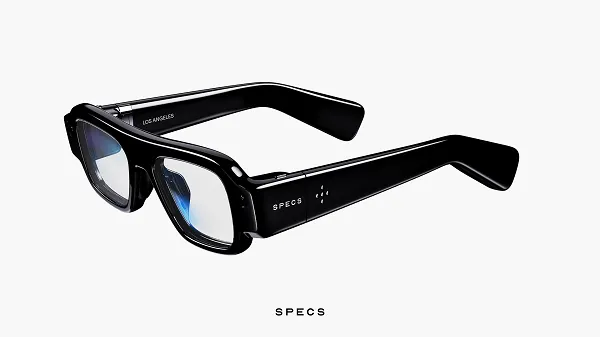
Snap recently announced that its augmented reality glasses, Specs, are now available for pre-order, a move that could position the company at a key point in the next phase of wearable computing and interactive digital experiences.

Specs offer a standalone AR experience, with all computing power integrated into the device itself. As a result, the glasses are heavier than the early prototypes of Meta's upcoming AR glasses—Meta plans to equip its AR device with acompute puck。
Snap, on the other hand, has chosen a fully integrated system approach. This inevitably adds weight to the glasses, and the larger frames needed to house this all-in-one system make them look more like safety goggles than stylish sunglasses.

To reduce weight, Snap uses advanced polymer materials in the frame construction, but the product is still noticeably heavier than Meta's current Display device. Specifically, the Snap Specs small size weighs 132 grams, and the large size weighs 136 grams; in comparison, the Meta Display glasses weigh 60 grams for the small size and 70 grams for the large size. A standard pair of Ray-Ban Wayfarer sunglasses without cameras weighs about 50 grams, while the Quest 3 VR headset weighs 514 grams.
Whether weight is a key selling point may depend on the actual use case and wearing comfort.
Snap says the Specs display system uses its proprietary Liquid Crystal on Silicon (LCoS) technology, "offering a 51-degree field of view and 16 million colors."
According to Snap: "The result is a large, vivid display—working like a 24-inch desktop monitor, and for viewing, like a 115-inch home theater screen placed about 10 feet away."
Additionally, Snap redesigned the waveguide technology "to provide a clearer, more seamless view of the real world." The device is powered by two Snapdragon processors: one for visual tasks, and the other dedicated to running the internal system.
In terms of battery life, Snap says the Specs can run for up to 4 hours on a single charge, and the included charging case provides 4 additional full charges, for a total of up to 20 hours of use.
When the Specs are recording, an LED indicator in the center of the device lights up to alert those around that they are being filmed.

In terms of appearance, this product is quite interesting—functionally so, but stylistically it lacks the Groucho Marx-esque humor. Regardless, Snap is maximizing market attention through a new advertising campaign featuring several celebrities wearing the device.

In these photos, the shooting angles are carefully designed to make the glasses look more streamlined and stylish.
This may help generate more interest and attract more users to sign up for pre-orders.
But the price is not cheap.
Interested buyers can order the Specs starting today for $2,195 (including a $200 refundable deposit).
In comparison, Meta's Display glasses cost $799, but note they do not have full AR capabilities. Apple's Vision Pro is closer to a VR headset and supports AR, priced at $3,499.
The Snap Specs are priced in between. Given that Snapchat's user base is younger, it will be interesting to see how Snap markets this price point to younger buyers.
Although Snap'suser base is more affluent, and the company may attract attention through this broader campaign and the added feature of AR-enhanced visuals, price remains a potential barrier.
In fact, Snap says the Specs come with hundreds of Snap Lenses built in. This will unlock a range of shared experiences that screens cannot achieve, "from reading greens, to overlaying interactive lessons on your drum kit with Drum Kit, to educational tools like Vector Fields that make invisible forces visible," the company says.
There is much to appreciate or at least be curious about with this device, and how Snap leverages its first-mover advantage in promotion will be a key point to watch. Meta plans to launch its AR glasses next year, and their appearance will be quite different from Snap's product.
Will this have an impact? Will style be the key selling point, or functionality? How will Snap's AR Specs compare to what Meta eventually releases?
Based on early information, Meta's AR glasses will be more stylish, and Meta will have the advantage of its established sales channels. The company has already shippednearly 10 million AI glasses。
But for now, Snap is actively making its move, hoping to elevate its business to new heights.