
Consumer Trust Deficit May Be the Biggest Constraint on Meta's AI Strategy
Meta's persistently low consumer trust could become a major obstacle to advancing its vision of AI superintelligence. From the Cambridge Analytica incident to the failure of the Diem project, and most recently the controversy over AI glasses, trust issues are continuously eroding users' willingness to accept its data collection tools.
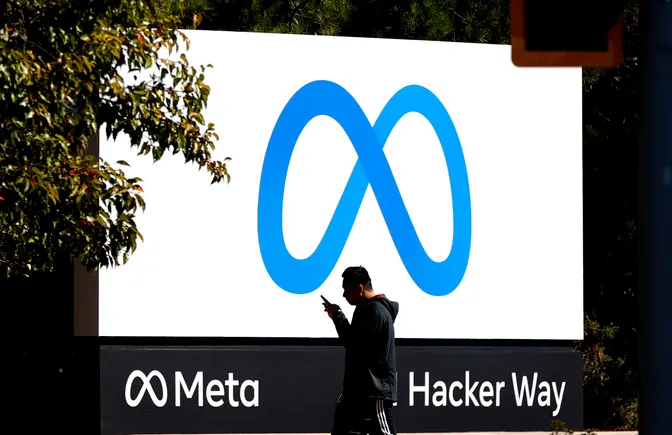
Does Meta possess enough audience trust to support its owner Mark Zuckerberg's artificial intelligence dream becoming a reality? This question is increasingly becoming a focus of industry attention.
On Monday, Zuckerberg released a 6,500-word manifesto outlining his vision of an AI-driven future: everyone will have a dedicated, customized personal AI agent at all times to assist with daily decisions. In the manifesto, Zuckerberg explained: "Everyone will have an extremely capable personal agent that understands you, your goals, and everything you care about. Your agent will work for you around the clock, improving your relationships, health, career, finances, household management, hobbies, and more. It will free up time for you to do what you love and help you accomplish more than you ever could before."
This vision is not a whim; Zuckerberg himself has been obsessed with it for years. As early as 2016, he developed a home AI assistant named "Jarvis," which provided useful guidance and reminders during his daily activities at home. Jarvis not only offered schedule reminders but also controlled the thermostat and lights, and supported sending messages via voice commands.
This is clearly a precursor to the evolution of Zuckerberg's AI vision—where computer systems can understand personal insights and information and transform them into practical advice to optimize life. This is also another concept Zuckerberg loves. In 2014, according to Business Insider, at Facebook's first all-hands meeting, Zuckerberg said he wears the same T-shirt every day to "simplify my life so that I have to make as few decisions as possible, other than thinking about how to best serve this community."
Thus, Zuckerberg is enthusiastic about being guided by data and is willing to eliminate choices he deems irrelevant from his life. These beliefs underpin his passion for AI superintelligence and data-driven guidance, aiming to maximize every waking moment.
The problem is that not everyone shares his way of thinking. If Meta is to implement this vision on a large scale, it would require every user of its superintelligent tools to entrust personal insights and data—including household dynamics, medical records, and financial information—to Meta. Would you feel comfortable handing all of that over to Meta?
This has been the company's core issue since the Cambridge Analytica scandal in 2016. Although many claim it wasn't actually a big deal—that the Cambridge Analytica team exaggerated their concept rather than truly stealing Meta's user insights—the incident did expose the extent to which Meta opened user data to various researchers, app developers, and advertisers, essentially monetizing personal insights to drive more commercial revenue opportunities. Global News aired footage of Zuckerberg testifying before the U.S. Senate and House of Representatives, and the aftermath led to a significant decline in public trust in the company.
In Business Insider's 2019 Digital Trust Report, Facebook ranked last in consumer trust. This lack of trust subsequently also sank Meta's Diem cryptocurrency project launched in 2019—which was intended to facilitate in-app payments. The project faced widespread scrutiny, with many regions stating they would not support the company creating its own currency and gaining more market power. Several prominent initial backers, including Visa, Mastercard, and PayPal, subsequently withdrew from the Libra Association and distanced themselves from the business.
The continued decline in trust in the Facebook brand ultimately prompted the company to rebrand as Meta in 2021, in an attempt to shed negative associations from the past. However, this move did not achieve the desired effect. According to a 2023 survey by Forbes Advisor (reported by Electronic Specifier), Meta was the tech company most distrusted by UK users regarding data handling, with 48% of respondents saying they did not consider Meta trustworthy in this regard. Meanwhile, Forrester's February 2025 Consumer Pulse survey showed that in the US and UK, only one-third of online adults expressed trust in Meta at the same level or higher than in 2024.
Given its poor trust position, along with Meta's ongoing controversies over social media addiction, negative impacts on teenagers, massive hacking attacks, and data center development, it is hard to imagine how many users would be willing to hand over more data to Meta in exchange for an AI bot providing guidance for their lives.
Meta's AI glasses are another controversy that could damage the company's brand. There are reports that some users drill out the recording indicator light on the device to record without others' knowledge. While Meta may not necessarily be responsible for users' bad behavior, it facilitates such behavior through its own tools, which undeniably adds another stain to its brand image.
The overall damage all these controversies have inflicted on Meta's brand seems likely to hinder its AI progress and bring Zuckerberg's superintelligence dream to an abrupt halt. Unless Meta can prove the usefulness of its latest AI models. Recent history suggests that usefulness can outweigh privacy concerns—if Meta can demonstrate significant value with its latest AI models, people might still allow Meta to access their sensitive personal information. But that is undoubtedly a huge ask, and it seems unlikely that a substantial number of people would actually agree to it.