
Snapchat: 'What It Means to Be a Teenager' Remains Unchanged in Digital Era
Snapchat, in partnership with Omnicom Media and Alter Agents, surveyed teens across five global markets to understand their online behavior, AI attitudes, and social media usage. Key findings show younger teens are more optimistic about AI, and the report argues for digital literacy over bans.
Snapchat has released fresh insights into how teenagers engage and interact online, shedding light on the role that social platforms and creators play in their lives. The findings, drawn from a new study, offer a nuanced view of current teen usage trends and their implications for marketers and broader audiences.
Conducted in partnership with Omnicom Media and Alter Agents, the research examined teen users across five global markets to capture direct perspectives on how young people navigate relationships, content, and technology. The resulting report provides potentially valuable data for brands, as well as a window into the mindset of a generation that is both digitally native and increasingly discerning.
According to Snapchat, the essence of adolescence has not shifted: "This generation hasn’t changed what it means to be a teenager. They’re still checking in with friends, gossiping, doing homework, figuring out relationships — just in more digital spaces and often on social platforms. However, they balance being teenagers with the adult habit of questioning everything they see online. They’re often fact-checking the news, verifying what AI tells them, and many don’t always believe what they see on social media."

One of the most striking takeaways is the prevalence of skepticism among young users toward online content. This critical stance could serve future generations well in combating misinformation, particularly as artificial intelligence tools become increasingly adept at simulating realistic content and events.
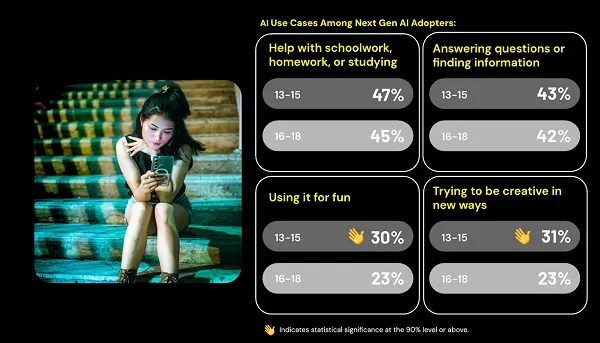
AI is a central theme of the report, with researchers probing how teens perceive AI interactions and the utility of these evolving tools.

The data reveals a generational split in AI optimism: 55% of younger teens (aged 13 to 15) believe AI will have a mostly positive impact on their generation’s future, compared with 37% of older teens aged 16 to 18.
The report also explores how teens allocate their time between online and offline social interactions.

Unsurprisingly, older teens spend more time with friends in person, while younger teens—who often have less freedom to leave home—rely more heavily on online engagement. This digital interaction is a key component of younger teens' social processes, underscoring the essential role that platforms play in their development.
These findings run counter to the rationale behind teen social media bans, which target younger users on social apps under the assumption that such platforms negatively impact social engagement. Proponents of these bans aim to encourage offline behavior and protect children from perceived harms. However, Snapchat’s research suggests that a more effective approach might be enhanced digital literacy education, equipping teens to navigate online spaces safely and critically.
Beyond online behavior, the report highlights offline activities popular among teens, offering a holistic view of their lifestyles.

Additionally, the study examines the influence of online creators in shaping teens' entertainment and engagement habits.

Overall, the report offers intriguing insights into the perspectives of young audiences and how they are integrating online content and AI into their daily lives. These findings hold value not only for market research but also for understanding what these trends portend for the next generation of consumers and the broader technological landscape.