
TikTok Rolls Out AI Literacy Measures to Address Generative Content Challenges
TikTok has announced a multi-pronged initiative to address the rise of AI-generated content, including an educational guide, an in-app hub, expanded funding for AI literacy programs, improved detection systems, and broader labeling partnerships. The company also highlighted the removal of over 86 million fake accounts in the first three months of the year.
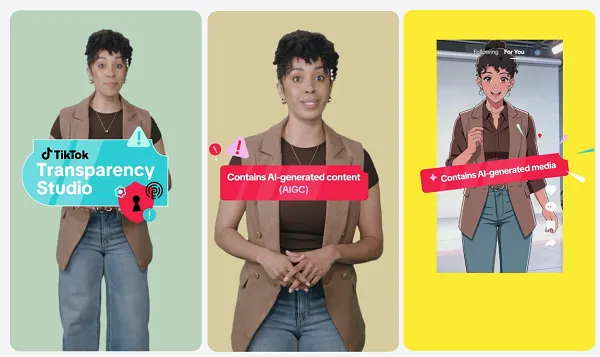
TikTok has unveiled a comprehensive initiative aimed at tackling the proliferation of artificial intelligence-generated content (AIGC) within its platform. The measures include an expanded user education program, enhanced detection systems, and broader labeling partnerships, all designed to increase transparency and help users navigate AI-generated material.
New AI Literacy Guide and In-App Hub
As a first step, TikTok launched a new AI literacy guide to assist users in identifying AI-generated content on the app. The guide, developed in collaboration with industry partners NAMLE and Henry Ajder, includes video overviews and explainers to help the community understand how to spot AIGC.
“We know from experts that education is critical to giving people control over their experiences with AI. That's why we've worked with industry partners NAMLE & Henry Ajder to create a new guide that helps our community use AI tools responsibly.”
In the coming weeks, TikTok plans to launch an in-app hub that will teach users practical skills for identifying AI-generated content when they search for AI-related terms. This hub is part of the company's broader effort to embed AI literacy directly into the user experience.
Expanded Funding and Detection Efforts
TikTok also announced expanded funding for AI literacy initiatives, including support for NoFiltr and the Raspberry Pi Foundation. These programs aim to promote AI literacy through TikTok content, reaching a wider audience with educational material.
On the detection front, TikTok is enhancing its systems to better identify AI-generated spam and misinformation. The company emphasized its long-standing commitment to removing fake accounts at scale, noting that over 86 million fake accounts were removed in the first three months of this year alone.
“We've long prohibited spam and used technology to find and remove it at scale, with more than 86 million fake accounts removed in the first three months of this year alone,” TikTok said. “But as this kind of content evolves, so must the ways in which we protect the integrity of our platform. In the coming weeks, we’ll be testing improvements to our detection systems for accounts dedicated to posting AI-generated spam on topics that could pose a risk to public trust or well-being. These include politics and current events, financial advice, and medical content.”
Labeling Partnerships Expanded
Finally, TikTok announced an expansion of its labeling partnerships, which are designed to flag more AI content within the app. The company reported that it has already labeled over 3 billion videos as AIGC using a combination of Content Credentials, creator labeling tools, and its invisible watermarking technology.
“To date, we’ve labeled over 3 billion videos as AIGC using a combination of Content Credentials, creator labeling tools and our invisible watermarking technology,” TikTok said.
The Broader Context: AI's Double-Edged Sword
These updates reflect the growing dilemma social media platforms face regarding generative AI. On one hand, apps are eager to integrate creative AI options to capitalize on the latest tech trends and boost engagement. On the other, users are increasingly fatigued by “AI slop”—low-quality, mass-produced content that is facilitated by the easy availability of these tools to billions of users.
It's important to note that AI itself is not inherently problematic; it has produced plenty of engaging, viral videos and images. However, as with any creative tool, many experiments fail to resonate with audiences. Moreover, social media users are now being used as test audiences for an endless stream of AI experiments, which are beginning to crowd out quality content.
With platforms offering financial incentives for top-performing posts and no limits on posting volume, there has been a virtual tsunami of AI slop infecting every app. This wave threatens to dilute the overall value of social platforms, potentially leading to reduced usage.
As a result, platforms must implement countermeasures to mitigate the impact of their own AI tools. This has led to a somewhat confusing approach, where AI is simultaneously promoted as both beneficial and harmful. In reality, AI is neither inherently good nor bad—it all depends on the specific use case. However, at present, the negative applications seem to outweigh the positive ones.
