
Building a Brand Presence on Facebook: A 2026 Guide
Facebook continues to attract billions of users, making it a valuable channel for marketers. This article provides a structured approach to building a brand presence on the platform, covering audience research, strategic planning, and performance analysis, with a focus on tools like Audience Insights, Ads Library, Meta AI, and Creator Marketplace.
Despite repeated predictions of its decline, Facebook maintains high usage levels. The platform serves billions of users who rely on it to stay up to date on news and updates from family and friends.
While it may no longer hold the "cool factor" of its earlier years, many users check their Facebook feed daily to avoid missing key updates. In fact, Facebook usage has seen a resurgence due to the popularity of Reels, which have drawn more users into the app for longer sessions.
Although Instagram, TikTok, and YouTube generally see stronger engagement performance, Meta’s flagship app remains a critical connector, presenting valuable opportunities for marketers.
Here are some tips on how to build the foundation of an effective Facebook presence in 2026.
Research Target Audience
Facebook’s audience insights tool provides data on a brand’s page audience, including in-depth demographic breakdowns, growth data, potential audience based on similar brand pages, and comparative brands.
This can be a helpful starting point, though it is largely based on previous activity, making it less valuable for newer pages.
All brand pages can benefit from the benchmarking section, however. This feature provides an overview of comparative page performance versus similar pages. In this section, Facebook also recommends similar pages for comparison purposes. That can help marketers glean insights into their Facebook approaches and better understand what’s working. Brands can take note of metrics like posting activity, post types, engagement behaviors, and style.
Meta’s Ads Library is another key feature. Marketers can take their list of comparative brands from the initial audience insights examples, then enter those brands into the Facebook Ad Library to see how other businesses are using paid promotion and discover what’s resonating best with their audience.

Marketers can also pose conversational queries to Meta AI and ask it to outline key trends and influencers in their niche. This could help streamline the trend discovery process and provide guidance on the top influencers and content in each topic segment.
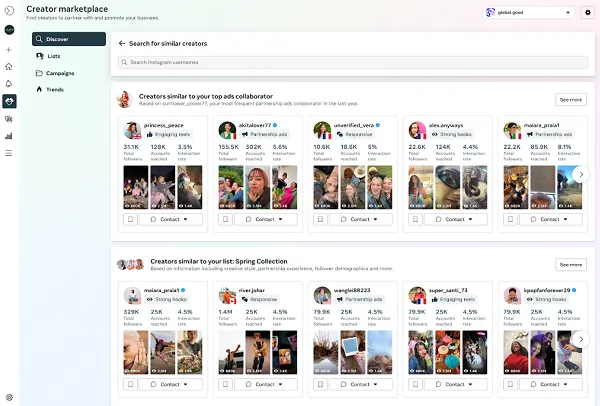
Marketers can also search for relevant influencers by topic in Meta’s Creator Marketplace.
Within a Creator Marketplace search, users can filter for IG or Facebook creators, which can provide another guide as to who’s creating relevant content. This will also offer direct links to post examples.
Creator Marketplace listings also include notes on recent engagement stats and audience make-up.

Finally, for brands that run ads, marketers can create an audience of people who follow their page, and subsequently examine other pages to glean more context into potential interests and audience crossover.

Outline Strategy
Based on these insights, marketers can build a general overview of key content types, topics, and influencers. With this, marketers can formulate an effective strategy based on proven approaches, including ad outlines, by examining what types of messaging and creative have generated strong results.
Meta’s Advantage+ artificial intelligence-powered ad tools are also advancing in their capacity to find the right audience for each brand and campaign. That could be another option to consider in paid strategy. Meta also has organic creative AI tools that are aligned with what’s working in the app.
Analyze and Improve
With a clear approach in place, marketers can then post to Facebook with a defined intent and measurable targets that align with brand goals. Brands will have a guide to what’s working, what formats to use, when to post, and how to maximize appeal with different audience segments.