
Pinterest Upgrades Ad Relevance Model: Integrating Real-Time Search and Off-Site Conversion Data
Pinterest disclosed the latest improvements to its ad serving model on its engineering blog. The updated model can simultaneously incorporate users' off-site conversion history and current search behavior to deliver more personally relevant promoted content. According to the official introduction, the solution focuses on three areas: new model architecture, novel training methods, and a hybrid serving process. Test data shows that the median relevance of candidate ads improved by approximately 275% to 300%, the relevance metric for Related Pins ads increased by 1.08%, and the delivery volume of candidate ads from selection to display increased by 2 times.
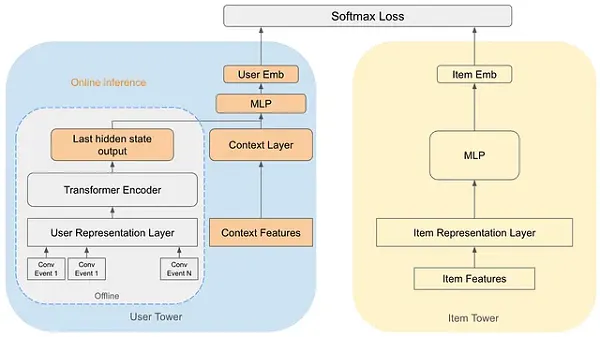
Pinterest recently shared the latest improvements to its advertising service model through its engineering blog. The updated model can now simultaneously consider users' off-site conversion history and real-time search behavior, thereby delivering more personally relevant promotional content.
In an article published on the Pinterest engineering blog, the team stated that they recently incorporated users' external conversion history into the model to predict the likelihood of users interacting with advertisers and specific products in the future.
However, this historical data-based approach only works after the fact and cannot reflect users' current search intent. To improve the ad relevance system, the Pinterest team built a second real-time behavioral data stream as a supplement.
According to Pinterest's official statement: "This solution focuses on three core areas: a new model architecture, innovative training methods, and a hybrid serving process."

The updated system can now combine users' past purchase history to evaluate more input signals related to Related Pins, thereby improving ad relevance.
Pinterest explained with an example: "For the Related Pins display scenario, the input features of the contextual layer are derived from the subject Pin the user is currently browsing, specifically including the aggregated embedding representation of the top-level interest categories of that subject Pin, weighted by confidence scores."
In short, Pinterest is integrating more data points to predict how likely users are to be interested in each Promoted Pin, including past conversion records and website visit history, thereby driving improvements in both relevance and user response.
Test results: relevance improved by 3 to 10 times
So, how much improvement does this upgrade actually bring? Pinterest stated that in tests, the updated model achieved a 3x to 10x improvement in ad relevance.
Pinterest further disclosed data: "The median relevance of candidate ads increased by approximately 275% to 300%. In the Related Pins display scenario, the overall ad relevance metric improved by 1.08%. Additionally, we observed a significant increase in the delivery of candidate ads, with twice as many retrieved ad candidates being served in display placements as before."
Although this is a technical explanation, the key takeaway is that Pinterest can now show each user more relevant ads based on a broader combination of factors. This change is likely to drive overall performance improvements for Pin ad campaigns.
Last week, Pinterest reported that its monthly active users reached631 million, a net increase of 60 million people year-over-year. Meanwhile, the continuous optimization of its AI-driven discovery process is also steadily improving user response rates and content relevance.