
2026 Facebook Brand Building Basics Guide: From Audience Research to Strategy Implementation
Despite being repeatedly declared declining, Facebook still maintains high usage rates. Based on Meta's official tools and data, this article outlines the fundamental steps for building an effective Facebook brand page in 2026: audience research, strategy development, and continuous optimization.
Despite repeated claims that Facebook has declined, the platform still maintains high user engagement. Currently, Facebook has billions of users who rely on the app tofollow news updates, and to get the latest updates from family and friends.
Facebook may no longer have the trendy appeal it once had, but many people still check their feeds daily to ensure they don't miss any key updates. In fact, thanks to thepopularity of Reels short-form video, Facebook usage has seen a resurgence, as this feature attracts more users into the app and extends their time spent on it.
Although Instagram, TikTok, and YouTube typically deliver the strongest engagement, Meta's flagship app Facebook remains a key connection hub, which may present valuable opportunities for marketers.
Here are some tips on how to build an effective Facebook brand page foundation in 2026.
Research your target audience
Facebook'sAudience Insights toolprovides data about your Page's audience, including in-depth demographic breakdowns, growth data, potential audiences based on similar Pages, and comparison brand information.
This can serve as a useful starting point, but it's important to note that the tool is largely based on users' past activity, so its reference value is relatively limited for newer Pages.
However, all brand Pages can benefit from thebenchmark comparison section. This feature provides an overview of how your Page performs compared to similar Pages. In this section, Facebook also recommends similar Pages for comparison. This helps marketers gain insights into their Facebook strategy and better understand what works. Brands can look at metrics such as posting frequency, post types, engagement behavior, and content style.
The Meta Ad Libraryis another key feature. Marketers can extract a list of comparison brands from the initial audience insights examples, then input those brands into the Facebook Ad Library to see how other businesses use paid promotion and discover what content resonates most with their audiences.

Marketers can also askMeta AIconversational queries, asking it to outline key trends and thought leaders in their niche. This helps streamline the trend discovery process and provides guidance on top creators and content in each topic section.
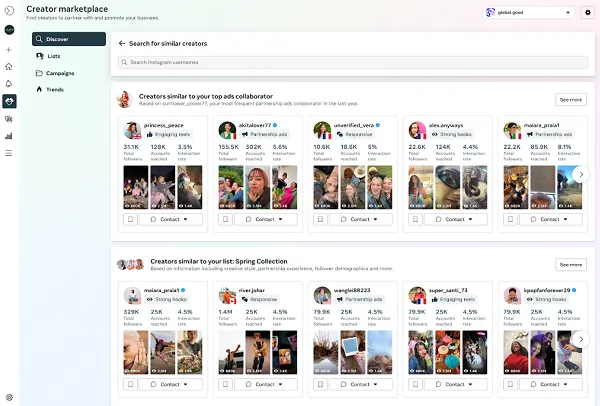
Additionally, marketers can search for relevant thought leaders by topic in theMeta Creator Marketplace.
In the Creator Marketplace search, users can filter for Instagram or Facebook creators, providing another avenue for finding creators producing relevant content. The platform also provides direct links to example posts.
Creator Marketplace listings also include notes on recent engagement data and audience composition.

Finally, for brands running ads, marketers can create an audience of users who follow their Page and further research other Pages to gain more context on potential interests and audience overlap.

Develop a strategy
Based on the insights above, marketers can build an overall overview covering key content types, topics, and thought leaders. With this, marketers can develop an efficient strategy based on proven methods (including ad frameworks), guiding decisions by researching which types of messaging and creative assets perform well.
Meta'sAdvantage+ AI ad toolsare also increasingly capable of finding the right audience for each brand and campaign. This can be another option worth considering in your paid strategy. Additionally, Meta offersorganic creative AI tools。
aligned with in-app best practices.
With a clear strategy in place, marketers can post on Facebook with clear goals and measurable metrics aligned with brand objectives. Brands will have a guide that clarifies what content works, which formats to use, when to post, and how to maximize appeal to different audience segments.